Just a Baby: Become a parent
- 3.4
- Rating
- 100.00K
- Installs
- Free
- Price

 Analysis by App-foxy
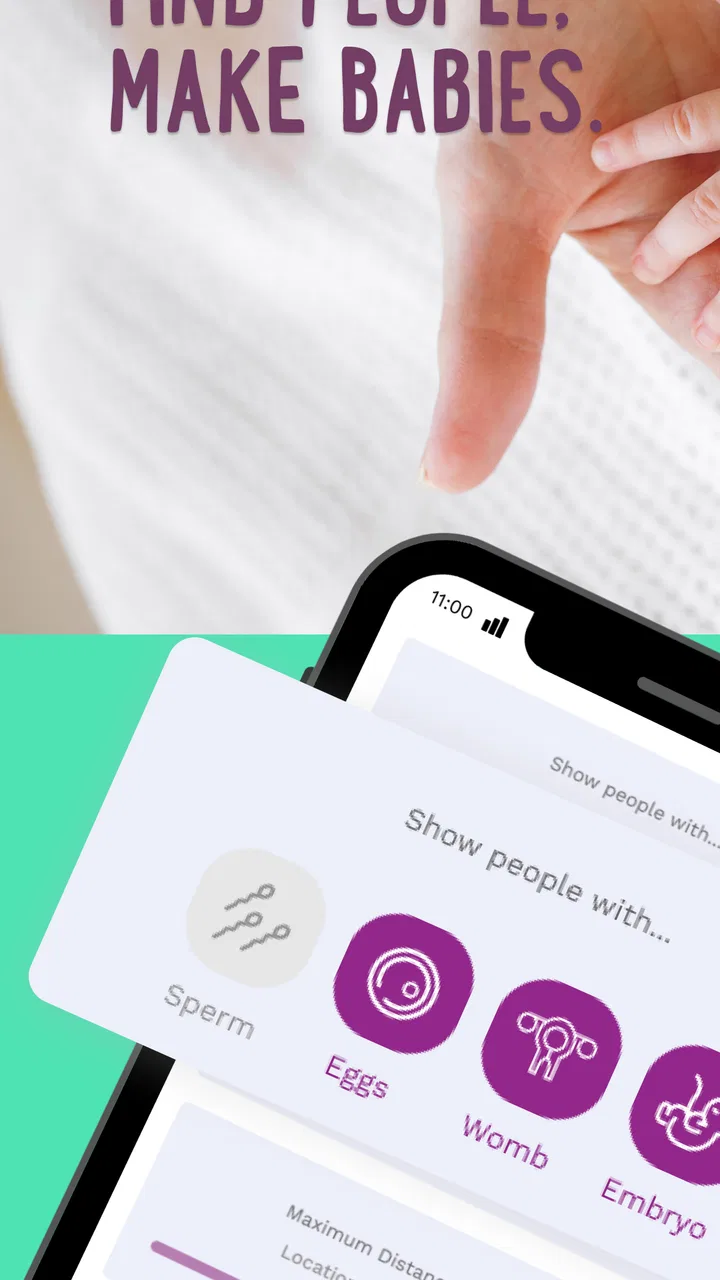
I approached Just a Baby as a practical parenting app rather than a conventional social network. Its purpose is to help people explore connections with egg and sperm donors, co-parents, and surrogates across different countries. That makes it a very different proposition from a pregnancy tracker, fertility calendar, or local discussion forum. It is aimed at people thinking seriously about becoming parents and who need to find possible routes, conversations, or relationships beyond the usual family-building options.
My first impression is that the app’s value depends less on entertainment and more on the quality of the people you meet through it. The software can make discovery easier, but it cannot replace medical advice, legal guidance, background checks, or the slow process of deciding whether another person is genuinely suitable. I would recommend treating it as an initial connection tool, not as a complete path to parenthood.
How the app fits into the family-building process
Just a Baby sits in the parenting category, although its audience is more specific than that label suggests. It is designed for prospective parents, donors, co-parents, and surrogates, so the same profile space may be viewed by people with very different goals. That variety is potentially useful, but it also means you need to be unusually clear about what you want before starting conversations.
You May Also Like

 Blood Strike: 2.5 Anniversary
Blood Strike’s Loadouts Turn Every Drop Into a Tactical Gamble
A close look at Blood Strike’s custom loadouts: how fast access to signature weapons reshapes its battle royale rhythm, rewards preparation, and narrows the gap between fights.

 Pandora - Music & Podcasts
Pandora’s Music Is Easy to Start, but Harder to Recover
Pandora’s strength is its low-effort path from a seed to a station. Its weak spot is how much confidence it asks you to place in connection, setup, and quiet recovery.

 8 Ball Pool
 Is Built on Rivalries, Rematches, and Routine
A close look at the rivalries, rematches, shared routines, and unanswered safety questions that turn a quick pool match into a persistent mobile community.

 Samsung Music
’s Quiet Strength Is Playing What You Already Own
Its reach comes less from spectacle than from dependable access to a personal library. That simplicity is both the app’s strongest retention engine and its ceiling.

 AccuWeather: Weather Radar
AccuWeather Review: A Quick, Clear Forecast for Everyday Decisions
For everyday plans, the best forecast is the one you can understand quickly. AccuWeather makes rain timing, radar, and local conditions easy to act on, with a few trade-offs.

 Hill Climb Racing
Why Hill Climb Racing Still Turns Crashes Into One More Run
A tiny car, a bumpy hill and one more upgrade: Hill Climb Racing keeps resurfacing because its simple chaos makes every near-miss feel personal.
More From Our News Desk



For example, someone looking for a co-parenting arrangement should not approach the experience in the same way as someone searching for a sperm donor. The emotional expectations, practical responsibilities, and legal questions are different. I found that the best way to use an app like this is to define your non-negotiables first: location, communication style, involvement after birth, willingness to obtain independent advice, and the kind of relationship you hope to build.
The global focus is one of the app’s most interesting characteristics. A wider reach can be helpful when local options are limited, especially for people who do not fit easily into traditional family-building channels. At the same time, international connections introduce extra complexity. Laws, medical procedures, parental recognition, travel requirements, and surrogacy rules can vary sharply between jurisdictions. A promising conversation is only a starting point.
I would also avoid assuming that a polished profile tells you much about someone’s reliability. The app can help you discover people, but users still need to verify identity, discuss expectations carefully, and involve qualified professionals before making commitments. That is not a criticism unique to this service; it is the central trade-off of using a connection platform for something as important as parenthood.
Who is most likely to benefit
The strongest audience is someone who already understands that becoming a parent may require a non-traditional arrangement and wants to meet people who are open to discussing it. It may be useful for intended parents who want to compare different possibilities, donors who want more direct contact with prospective families, and people considering co-parenting rather than a conventional partnership.
It can also be valuable for users who feel isolated. Searching for donors, surrogates, or co-parents can be emotionally difficult, particularly when friends and relatives do not understand the choices involved. Finding others who are at least exploring a similar route can make the process feel less solitary. I would still keep expectations measured: the app may create an introduction, but it cannot guarantee compatibility or a successful arrangement.
On the other hand, I would not choose it as my first tool if I wanted a tightly managed professional service. Someone looking for clinic coordination, formal screening, legal contracts, or a medically supervised donor process would be better served by established fertility professionals and specialist agencies. The app’s strength is access to potential connections, not end-to-end case management.
A realistic way to use it
Imagine a couple who have spent months discussing whether a known donor or co-parenting arrangement could work for them. They install the app, create a profile, and begin browsing people whose goals appear broadly compatible. Instead of immediately moving a conversation off the platform or making promises, they use the first exchanges to clarify location, desired involvement, expectations around contact, and willingness to seek separate legal advice.
After a few conversations, they might create a private checklist of questions and compare answers. Do all parties agree about future communication? What happens if one person changes their mind? How would medical information be shared? What role would each adult have? The app is useful in this scenario because it helps start the search, while the checklist prevents the excitement of finding a possible match from taking over the decision-making process.
A donor could use the same workflow differently. Rather than presenting only personal interests, the donor might explain boundaries, availability, health-history discussions, and the type of relationship they are comfortable considering. Clear wording can reduce misunderstandings later. In my view, the app works best when profiles are treated as conversation starters, not as advertisements or informal contracts.
What the current release tells me
The current version is 25.4.0, which suggests an actively maintained product rather than an abandoned experiment. The app was released on September 26, 2016, so it has had a long enough lifespan to become familiar to people searching for this particular kind of connection. Its developer is Just a Baby Inc., and the app has passed the early novelty stage of being a brand-new idea.
There is a meaningful difference between longevity and maturity, however. A long-running app can still leave important decisions to its users, and that is especially significant here. The current release may improve the experience of browsing and contacting people, but it does not turn an informal introduction into a verified family-building arrangement. I would judge the product on how well it helps you begin a careful process, not on whether it removes every difficult step.
The app is free to install, with optional in-app purchases ranging from $1.99 to $109.99 per item. That pricing range deserves attention before you invest time in building a profile or relying on the service. I would check what each purchase provides and whether it is genuinely necessary for your intended workflow. For a sensitive decision, paying for visibility or additional access should never be confused with paying for trust, screening, or legal protection.
It supports Android devices running version 7.0 or later, which makes it accessible to many older phones as well as newer models. That is convenient for people who do not want to replace a device simply to explore their options. Still, compatibility does not tell you whether the experience will feel equally comfortable on every screen size or older handset, so I would keep the first session exploratory rather than committing immediately to a paid feature.
How existing users may experience the evolution
People who have used the app for a long time may notice that the product now serves a broader and more established audience than it did at launch. The presence of over one hundred thousand installs indicates that it has reached a substantial group of people, while the average rating of 3.4 shows a mixed experience rather than universal satisfaction. I read that combination as a reason to approach it with realistic expectations.
The rating matters because connection apps are highly dependent on individual circumstances. One person may find a valuable contact quickly, while another may encounter inactive profiles, mismatched intentions, or conversations that go nowhere. A middling average can reflect those uneven outcomes as much as the interface itself. I would not dismiss the app because of the score, but I would not assume that a large user base automatically means a strong match for everyone.
The app has around 2.9 thousand ratings and 648 reviews, so there is enough public feedback to suggest that users have had varied reactions. I would look for recurring themes when deciding whether to try it, especially comments about profile quality, responsiveness, ease of use, and the usefulness of any paid options. Individual reviews can be emotional, but repeated practical complaints are worth taking seriously.
For an existing user, the most important benefit of continued development is probably reduced friction during the search. A smoother way to describe intentions, review potential contacts, and manage early conversations can save time and prevent avoidable misunderstandings. Yet no software update can solve the hardest part of this category: deciding whether several adults can communicate honestly and share compatible expectations about a child’s future.
Small workflow choices that make a big difference
My first practical tip is to write the profile for the conversation you want, not for the largest possible audience. Vague wording may attract more attention, but it also creates more mismatches. State what you are exploring, how certain you are, and what sort of involvement you expect. If you are still learning about co-parenting or donor arrangements, saying that openly is more useful than presenting yourself as ready for an immediate commitment.
Second, separate emotional compatibility from practical compatibility. Someone may seem kind, thoughtful, and easy to talk to while still being unsuitable because of distance, timing, medical considerations, or different ideas about parental responsibility. I would make two lists: qualities that help a relationship feel safe and questions that determine whether the arrangement could function in everyday life. The app can support the first conversation, but you need to do this analysis yourself.
Third, keep an internal record of important discussions. Do not rely on memory after several chats with different people. Note what each person has said about contact, boundaries, expectations, and next steps, then revisit those notes before becoming more emotionally invested. This is especially helpful when the app exposes you to international contacts and several possible arrangements at once.
A fourth useful habit is to slow down before moving communication elsewhere. Private messaging services may feel more convenient, but keeping early conversations organized makes it easier to notice contradictions and pressure. I would be cautious if someone pushes for money, demands secrecy, discourages independent advice, or wants a major commitment before basic questions have been answered. Those warning signs matter more than a persuasive profile.
Where the experience still falls short
The biggest limitation is that discovery is not verification. A user can find a promising person, but the app should not be treated as proof of identity, health, intentions, or legal suitability. Anyone considering a real arrangement should seek independent legal advice and appropriate medical guidance. In co-parenting situations, a friendly conversation is not a substitute for a detailed agreement prepared with professional help.
Another weakness is the possibility of uneven expectations. The words “donor,” “co-parent,” and “surrogate” can mean different things to different people. One user may imagine occasional updates, while another expects an active and permanent role. If the app does not force every important distinction into the open, users must do that work themselves from the beginning.
The global scope can also be a disadvantage. A broad search sounds appealing, but distance may make meetings, medical appointments, travel, and long-term communication difficult. Cross-border legal questions can be particularly complicated. I would only pursue an international contact after confirming that professional advice is available in every relevant location and that the arrangement is realistic beyond the initial excitement.
Privacy is another area where I would be deliberate. A profile connected to fertility, sexual health, family plans, or personal identity can reveal sensitive information. Share only what is necessary at the early stage, avoid publishing details that could identify your home or workplace, and think carefully before uploading anything you would not want circulated. The app may open a door, but you decide how much of your personal life is visible through it.
The mature content rating of 17+ is appropriate for the subject matter. This is not an app I would hand to a teenager or treat as casual family entertainment. The conversations involve adult relationships, reproduction, and potentially sensitive personal decisions. Adults should also remember that an age rating does not guarantee that every person they encounter is trustworthy or that every conversation will be respectful.
How it compares with more traditional options
Compared with fertility clinics, Just a Baby is more open-ended and usually less structured. A clinic can provide medical processes, professional oversight, and a clearer route through treatment, while this app gives users a way to look for personal connections. If your priority is medical screening and procedural certainty, a clinic is the better starting point.
Compared with specialist agencies, the app may feel more direct and less formal. That can be appealing to people who want to speak with potential donors, co-parents, or surrogates in their own words. The trade-off is that you may have to perform more of the screening, coordination, and expectation-setting yourself. An agency may cost more, but its structure can be valuable when the stakes are high.
Compared with ordinary dating apps, this service is more focused on family-building intentions. That focus can save time because users are not necessarily beginning with romantic compatibility as the main goal. However, the emotional consequences can be more serious, and the conversations need more care than a typical dating exchange. I would not use a general dating app as a direct replacement if the central purpose is finding a donor or co-parent.
Compared with online forums, the app is more oriented toward individual connections than broad peer discussion. Forums can be better for learning from experiences, asking general questions, and understanding the range of issues involved before contacting anyone. In practice, I would use educational communities and qualified professionals alongside the app, not instead of it.
Questions I would answer before installing
If you are wondering whether you need to be ready to become a parent immediately, my answer is no, but you should be honest about your stage. Exploring options is reasonable; presenting uncertainty as a firm commitment is not. Use the early period to learn, define your boundaries, and discover whether the people you meet share your timeline.
If you are asking whether a match found through the app is enough to proceed, I would say no. Treat the match as an introduction only. Before any serious decision, arrange independent identity checks, medical discussions, legal advice, and clear written agreements where appropriate. Every adult involved should have the opportunity to obtain advice separately.
If you are concerned about paying for features, start with the free experience and identify the exact problem a purchase would solve. A paid item might improve convenience, but it cannot guarantee a compatible person or a safe outcome. I would never spend money simply because I felt pressured to act quickly.
If you are considering an international connection, ask whether you can realistically maintain contact, travel when necessary, and obtain advice in the relevant countries. Distance is not just an inconvenience; it can affect legal recognition, medical arrangements, and the child’s long-term relationship with every adult involved.
Finally, if you only want a pregnancy information tool, this is probably the wrong choice. It is not the same as tracking symptoms, monitoring appointments, or receiving general parenting guidance. Its purpose is connection around alternative routes to parenthood, and that narrow focus is both its main appeal and its clearest boundary.
What I would watch in future use
I would pay attention to whether future updates make intentions easier to express without reducing complex family arrangements to a few labels. Better clarity would help users distinguish between donation, co-parenting, and surrogacy expectations before they begin emotionally demanding conversations.
I would also look for signs that the product is becoming more useful for careful communication rather than simply encouraging more contacts. Tools that help people organize conversations, revisit boundaries, and recognize incompatible expectations would add more value than a larger stream of profiles. In this category, thoughtful matching matters more than endless browsing.
Another area worth watching is how the app handles the tension between global reach and local reality. International discovery is attractive, but users need practical awareness of distance, law, and professional support. Any improvement that helps people think through those issues before committing would make the service more responsible and more useful.
My final view is positive but cautious. Just a Baby gives people a focused place to begin conversations that can be difficult to start elsewhere, and that alone can be meaningful. I like it best as an early-stage discovery tool for adults who are prepared to do serious follow-up work. I would recommend it to someone seeking donors, co-parents, or surrogates who understands that the app opens possibilities rather than guaranteeing outcomes.
I would skip it if I wanted a medically supervised service, formal legal protection, or a quick and predictable route to parenthood. For everyone else, the sensible approach is to use the free entry point, write a precise profile, protect personal information, take conversations slowly, and bring in qualified professionals before making commitments. The app can help you find the right conversation, but the safety and future of the arrangement still depend on the people involved.
FAQs for Just a Baby: Become a parent
01What is Just a Baby: Become a parent?
Just a Baby: Become a parent is a matchmaking app designed for people who want to explore parenthood through a co-parenting arrangement. It can help users connect with potential co-parents, including people who may not be seeking a traditional romantic relationship. Profiles, preferences, communication tools, and location-based discovery are generally central to the experience, although available features may vary by platform and region.
02Is Just a Baby: Become a parent a dating app?
It has some features that resemble a dating app, such as profiles, matching, and private conversations, but its main purpose is different. The service focuses on finding potential co-parenting partners rather than simply arranging romantic dates. Users should be clear about their intentions, discuss expectations early, and understand that matching through the app does not guarantee compatibility, commitment, legal agreement, or a successful parenting arrangement.
03Is Just a Baby: Become a parent safe to use?
The app may provide tools for discovering and communicating with other users, but no online platform can guarantee that every profile is genuine or that every person has good intentions. Avoid sharing sensitive personal information too quickly, use in-app communication initially, verify identities carefully, and meet only in public places if you decide to meet someone. Never treat an online match as automatically trustworthy.
04Is Just a Baby: Become a parent free to download and use?
The application may be available to download without an upfront charge, but some functions can require in-app purchases, subscriptions, or other paid access depending on the current version, operating system, and country. Before registering or sending messages, check the app-store listing for pricing details, renewal terms, and available features. Subscription charges, if offered, should be reviewed carefully before confirming payment.
05What should I discuss with a potential co-parent before making a decision?
You should discuss major practical, financial, legal, and emotional issues before considering parenthood with someone you met through the app. Important topics include parenting roles, custody, living arrangements, expenses, medical history, fertility plans, education, religion, contact with extended family, and long-term decision-making. Because laws differ by location, consulting an independent family-law professional is strongly recommended before making commitments.
Pros
- Clear step-by-step guidance for new parents
- Helpful reminders make daily planning easier
- Covers pregnancy and early childcare topics
- Simple interface is easy to navigate
- Useful for tracking important milestones
Cons
- Some features may require a paid subscription
- Advice may feel too general for complex situations
- Limited customization for different parenting styles
- Notifications can become frequent over time
- Not a substitute for professional medical guidance

Just a Baby: Become a parent
Gallery